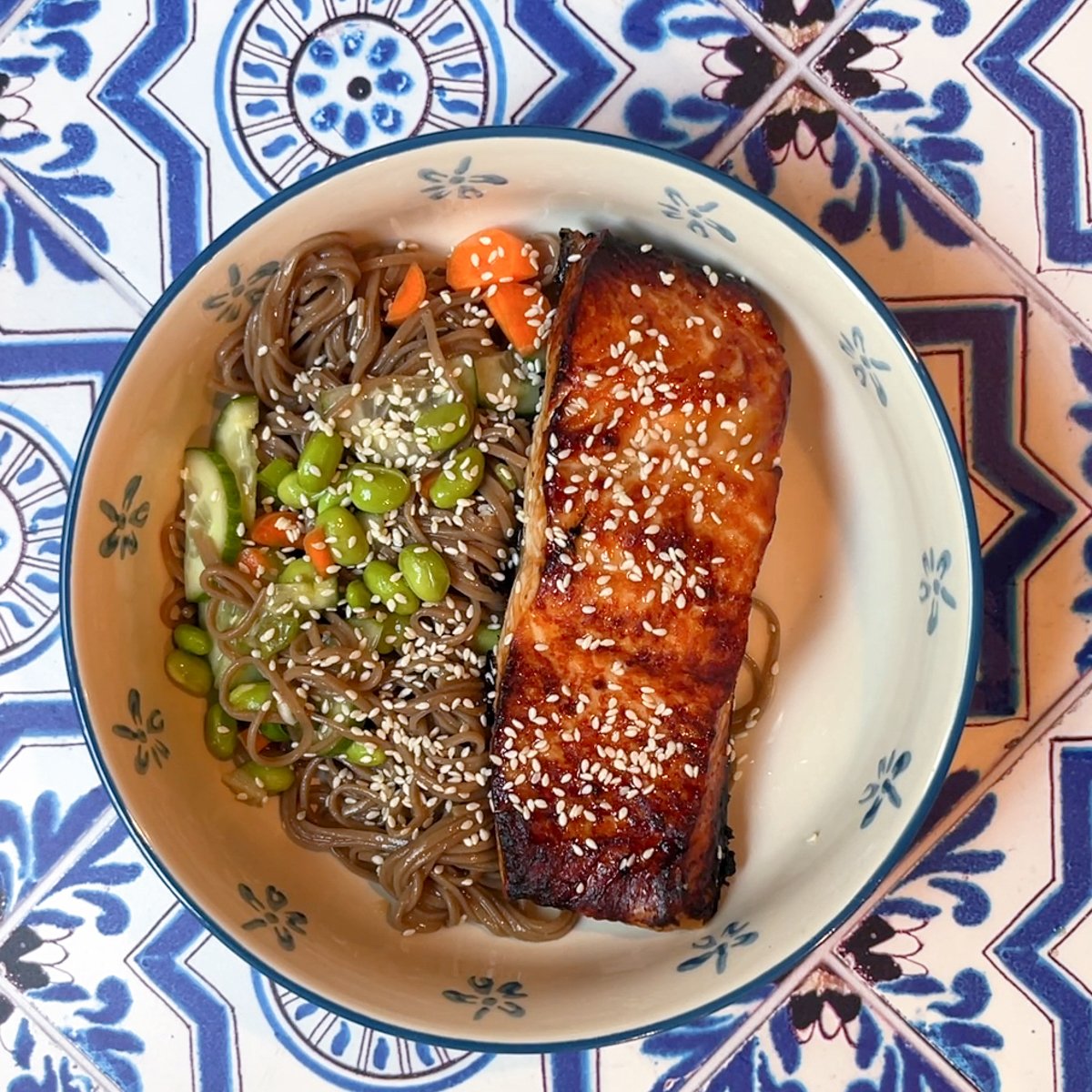
Salmon Soba Salad
Cool buckwheat noodles, crisp fresh vegetables, a tangy sesame dressing, and tender miso-glazed salmon — this Salmon Soba Noodle Salad is everything you want in a weeknight dinner. It’s light but satisfying, packed with protein, and comes together in about 30 minutes. If you're looking for a cold salmon soba noddle bowl to cool down a hot day, this is the perfect recipe for you.
Ingredients
For the Bowl:
- 6 oz soba noodles 100% buckwheat for gluten-free
- 1 Miso Glazed Salmon (or other cooked salmon), about 6 oz cooked salmon
- 1 cup carrots shredded
- 1 cup cucumber thinly Sliced
- ½ cup edamame shelled and thawed if frozen
- 1 scallion thinly sliced
- sesame seeds optional, for toppings
- nori strips optional, for toppings
- avocado slices optional, for toppings
- pickled ginger optional, for toppings
For the Dressing:
- 1 tablespoon soy sauce or tamari for gluten-free
- 1 tablespoon rice vinegar
- 1 tablespoon sesame oil
- 1 teaspoon maple syrup or honey
- 1 teaspoon ginger grated fresh or pinch ground ginger
- ½ teaspoon chili crisp or sriracha, for heat

Instructions
- I prefer this recipe with my easy Miso Glazed Salmon in the Air Fryer recipe for perfect, caramelized salmon in under 10 minutes.
- Alternatively, pan-sear your salmon: heat a drizzle of oil in a skillet over medium-high heat, add the salmon skin-side down, and cook for 4–5 minutes per side until cooked through (internal temp 125–145°F).
- You can make the rest of the salad while your salmon is cooking .
- Cook soba noodles according to package directions. Drain and rinse under cold water to stop the cooking and keep them from sticking. They should be in the water for about 3 minutes.
- Whisk together the dressing ingredients in a small bowl.
- Prepare your vegetables: shred the carrots, slice the cucumber, and thaw the edamame.
- Assemble the bowl: Divide soba noodles between two bowls. Arrange carrots, cucumber, edamame, and scallions on top.
- Drizzle with dressing, then garnish with sesame seeds, nori, or avocado if desired.
- Add the salmon, either whole or flaked, on top of the vegetables.
- Serve chilled or at room temperature and enjoy!
Notes
Hint: Rinse the soba noodles really well under cold water after cooking— this removes excess starch and keeps them from clumping.